
Imagine a place where stones tell stories of popes and cardinals, but also the daily life of a vibrant and hard-working community. Welcome to Barbara, a pearl nestled among the soft hills of Val Mivola, an area that combines the sweetness of the Marche landscape with a profound and surprising history. This itinerary isn’t just a tourist visit, but an immersion in a village “to be inhabited and visited,” where the past isn’t locked away in a display case, but lives on in the architecture and memories of its inhabitants.
We will guide you through an exclusive route that reveals the authentic soul of the country: from the secret rooms of ecclesiastical power to record-breaking urban curiosities, to discovering treasures of sacred art hidden in unexpected places. Let yourself be surprised by Barbara, a village that knows how to welcome the traveler with the same silent elegance as the panorama that surrounds it.
Stage 1
The Heart of the Community: The Town Hall and Historical Memory
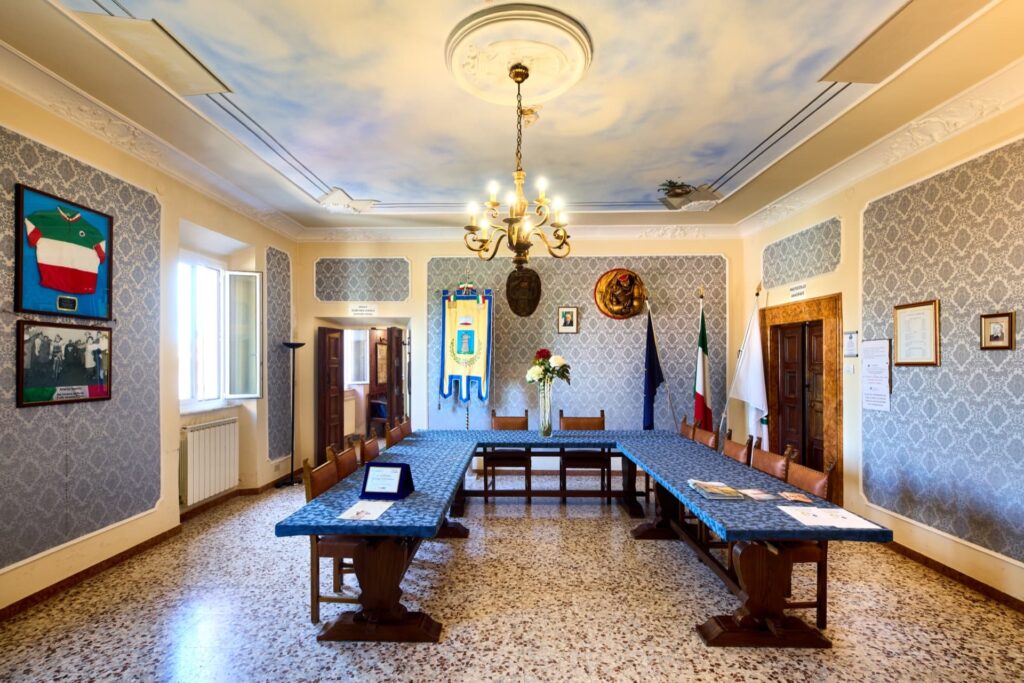
Our journey begins by crossing the threshold of the town hall, a true guardian of the local identity. As soon as you enter the foyer, you'll be greeted by a captivating black-and-white photography exhibition that testifies to Barbara's vibrant past: shots depicting soccer matches, the famous Necchi sewing school, and unforgettable characters like the ice cream maker Raissa. Ascending to the upper floor, you'll enter what is now the Mayor's office, but which once served as a waiting room for Cardinal Albano, nephew of Pope Clement XI. The atmosphere is solemn, enhanced by period doors and an original chest still bearing the cardinal's coat of arms. Pay attention to an intriguing detail: a hidden, narrow spiral staircase, used by the Cardinal to discreetly let his guests—or perhaps a few female visitors—out of sight.
Stage 2
Traces of Style: The Ex Liberty Bank
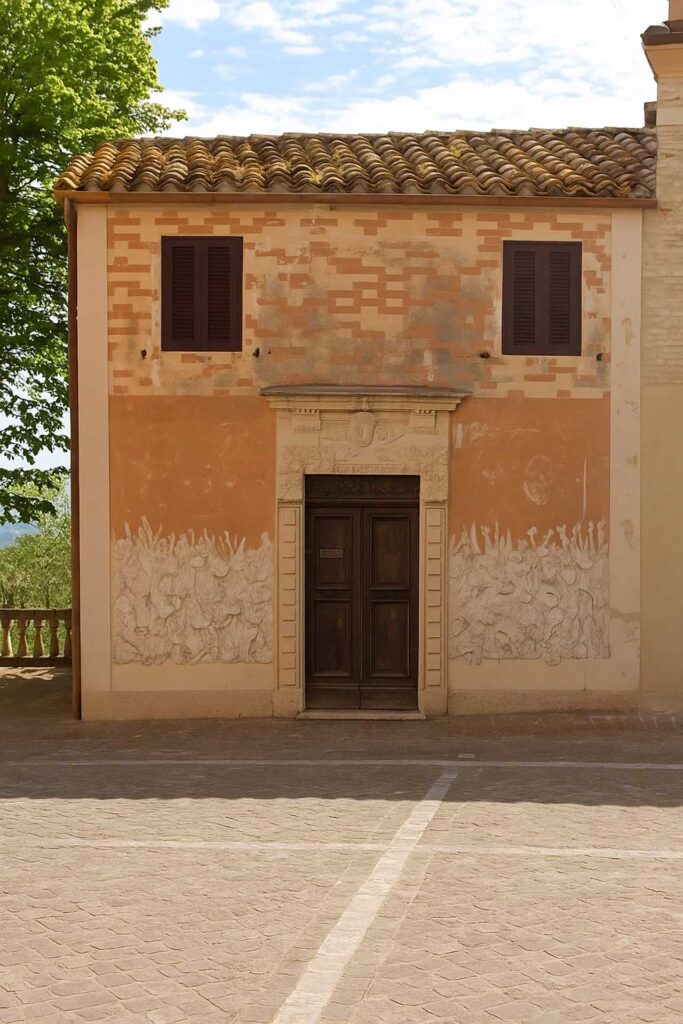
Leaving the town hall and strolling along the main street, your gaze will be drawn to a façade that stands out for its singular beauty. This is the building that once housed the local bank, which closed following its bankruptcy in 1929. Despite its unfortunate financial history, the building is an architectural gem that still retains its charm intact: you can admire splendid Art Nouveau floral bas-reliefs decorating the surface, creating an elegant and unexpected contrast between the rusticity of the exposed brick and the refinement of the early 20th-century floral art.
Stage 3
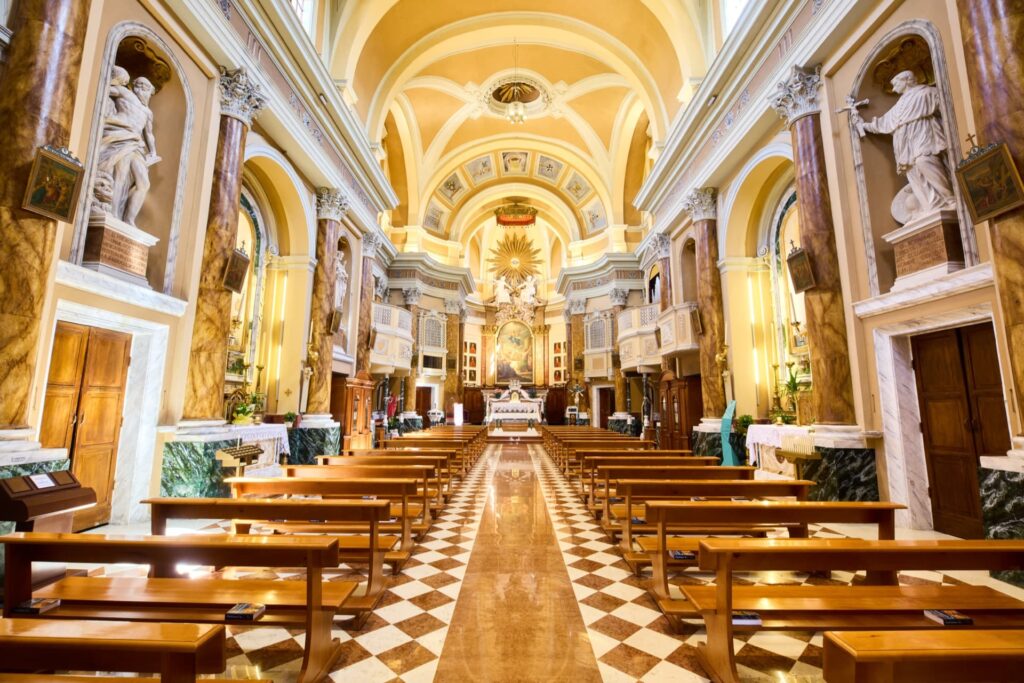
Faith and Rebirth: The Church and the Octagonal Baptistery
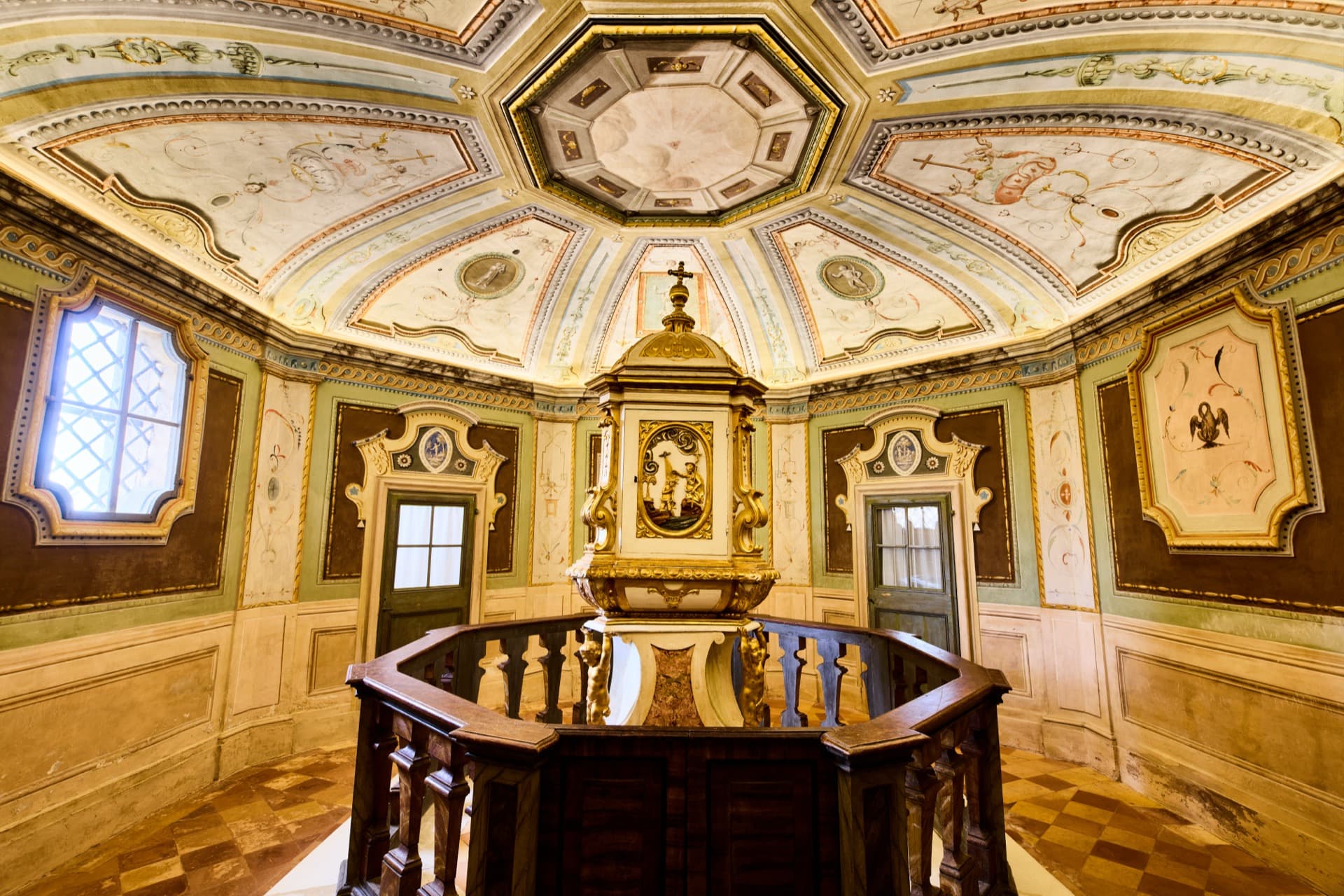
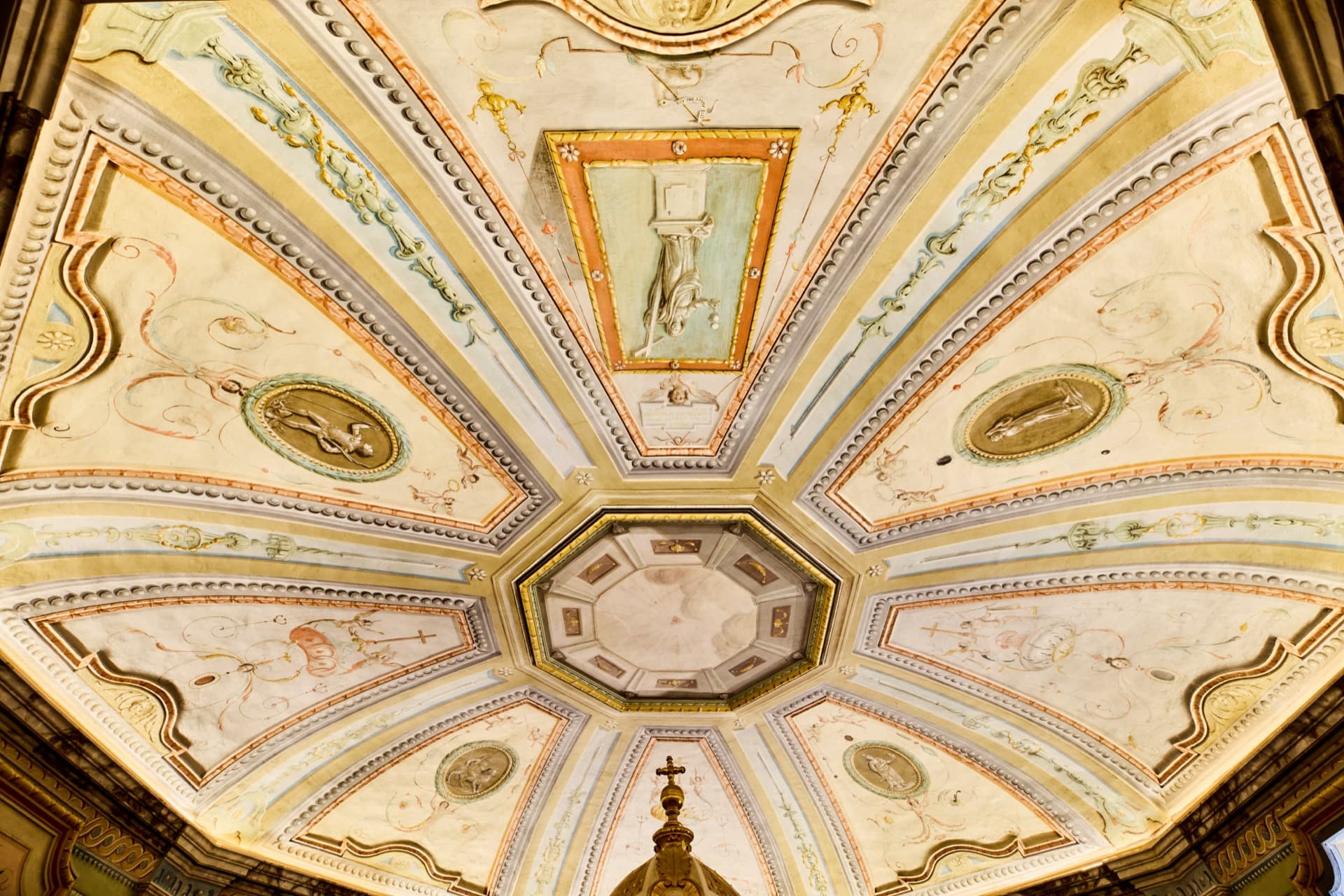
Built in 1791 by Cardinal Giovanni Francesco Albani with an octagonal plan, symbol of resurrection (seven days of Creation, the eighth is the extra day, eternity), while the fountain has three doors and symbolizes the Holy Trinity.
The Baptistery was restored in 1998. The octagonal plan is a symbol of resurrection; the baptismal font, carved by Francesco Saverio Moschetti of Monte Giorgio, has three doors and symbolizes the Holy Trinity. In the main mirror, the precursor Saint John the Baptist is depicted in bas-relief figures in the act of baptizing the Savior. Inside the spring is preserved the copper water tray, with the Albani coat of arms.
On the walls, four lunettes tell the story of original sin; the painted pelican is an allegorical symbol referring to the Eucharist. The deer, the ostrich, the lion and the elephant, represented on the walls, symbolize the four cardinal virtues.
Stage 4
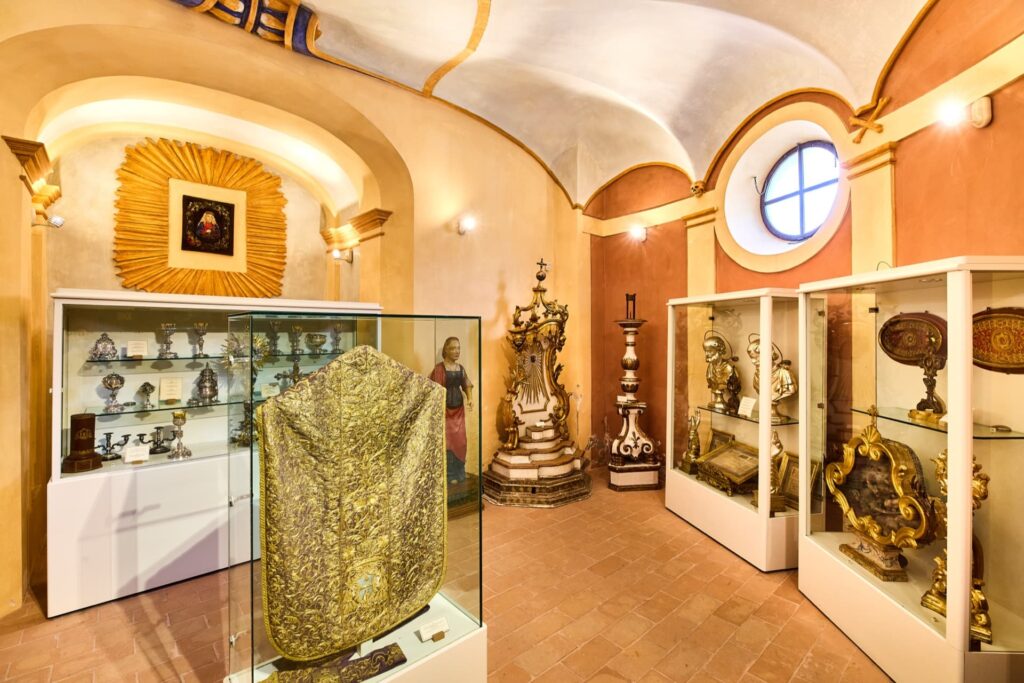
The Sacred Treasure: The Ecclesiastical Museum (Former Cemetery)
Inside the church complex lies one of Barbara's most fascinating surprises. You'll enter a space that once served as a cemetery—as evidenced by the themed decorations with skulls and bones still visible—and which was abandoned following Napoleon's edict. Today, this resting place has been transformed into a small museum housing priceless gold-embroidered vestments. The collection's highlight is undoubtedly the 15th-century statue of Saint Barbara: a sculptural masterpiece carved from a single tree trunk, its vibrant colors resurfaced thanks to careful restoration. Here you'll also discover a historical curiosity: the town's name doesn't derive from the saint, but from the "barbarians" who settled on the hill, distinguishing themselves from the Romans who occupied the valley floor.
Stage 5
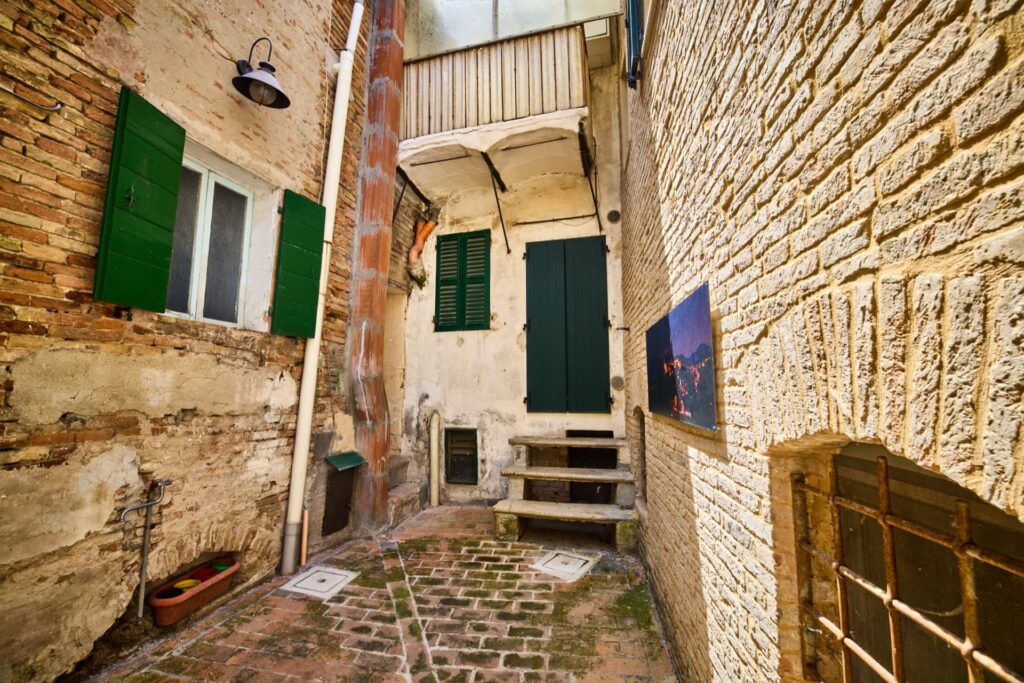
Curious Records: Piazza Padella
Get ready to discover a truly unusual corner, sure to bring a smile to every visitor's face. We'll lead you to what's known as "Piazza Padella," often cited as one of the smallest squares in the world. More than a square in the traditional sense, it's technically a courtyard, a light well carved between buildings, accessible via a narrow alleyway reminiscent of a frying pan handle. Despite its diminutive size, this space has a significant human history, having once been inhabited and lived in by several families, a testament to the incredible urban adaptability of medieval villages.
Stage 6
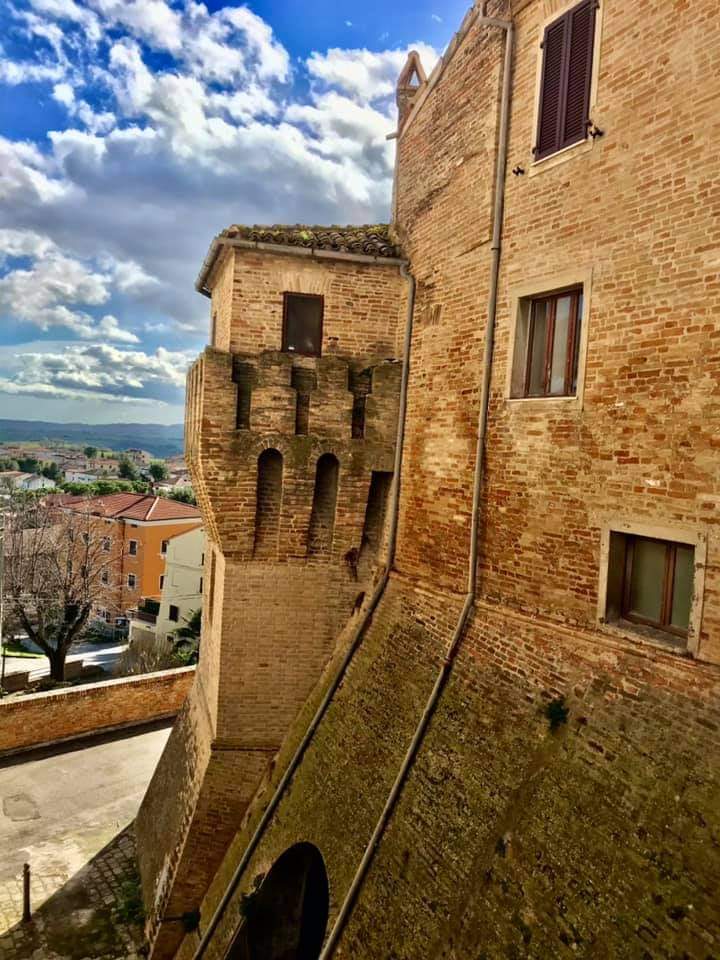
The Belvedere: The Medieval Tower
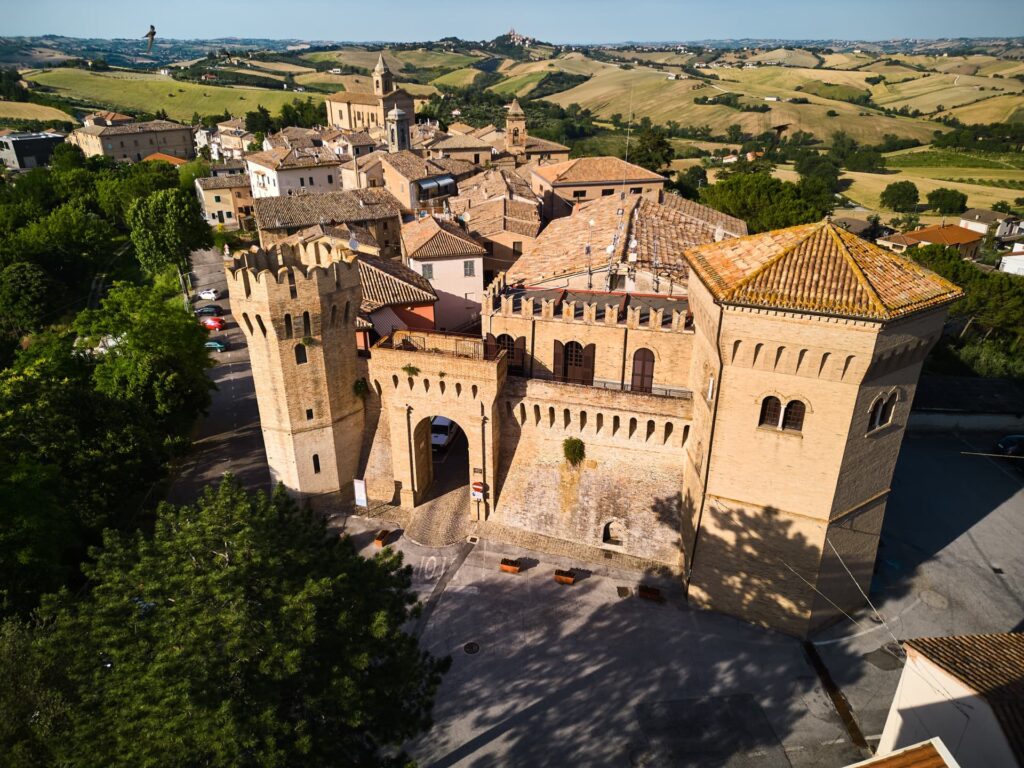
Our tour concludes by reaching the highest and most panoramic point in the village: the majestic Torrione, or Mastio, which dominates the ancient castle walls. From this privileged position, you can enjoy a breathtaking view spanning the entire Mivola Valley. A gentle and harmonious landscape unfolds before your eyes, composed of cultivated hills and colors that change with the seasons; a setting so evocative that, as visitors often remark, it rivals the beauty of the most celebrated Tuscan countryside. It's the ideal place to snap a souvenir photo and breathe in the serene air of this corner of the Marche.
You might also be interested
Barbara Digitale - Questo intervento è stato realizzato con il contributo di 45.000 € dell’Unione europea Bando POR FESR Marche 2021-2027 - Asse 1 - Azione 1.2.2 - Int. 1.2.2.2 Bando per “Servizi digitali integrati” - CUP H57C24000010006